June 8, 2026 Methods of Normative Political Theory Newsletter #15 June 2026The quarterly newsletter of the ECPR Standing Group on Methods of Normative Political Theory
On behalf of the Standing Group on Methods of Normative Political Theory, we are happy to announce that the quarterly newsletter of the Methods of Normative Political Theory will appear at the beginning of March, June, September, and December. The newsletters will remain ... more
From the Standing Group on Methods of Normative Political TheoryPast Academic Events ECPR Joint Sessions Workshop 2026Between Norms and Evidence: Connecting Normative Political Theory and Political Science
8-10 April 2026
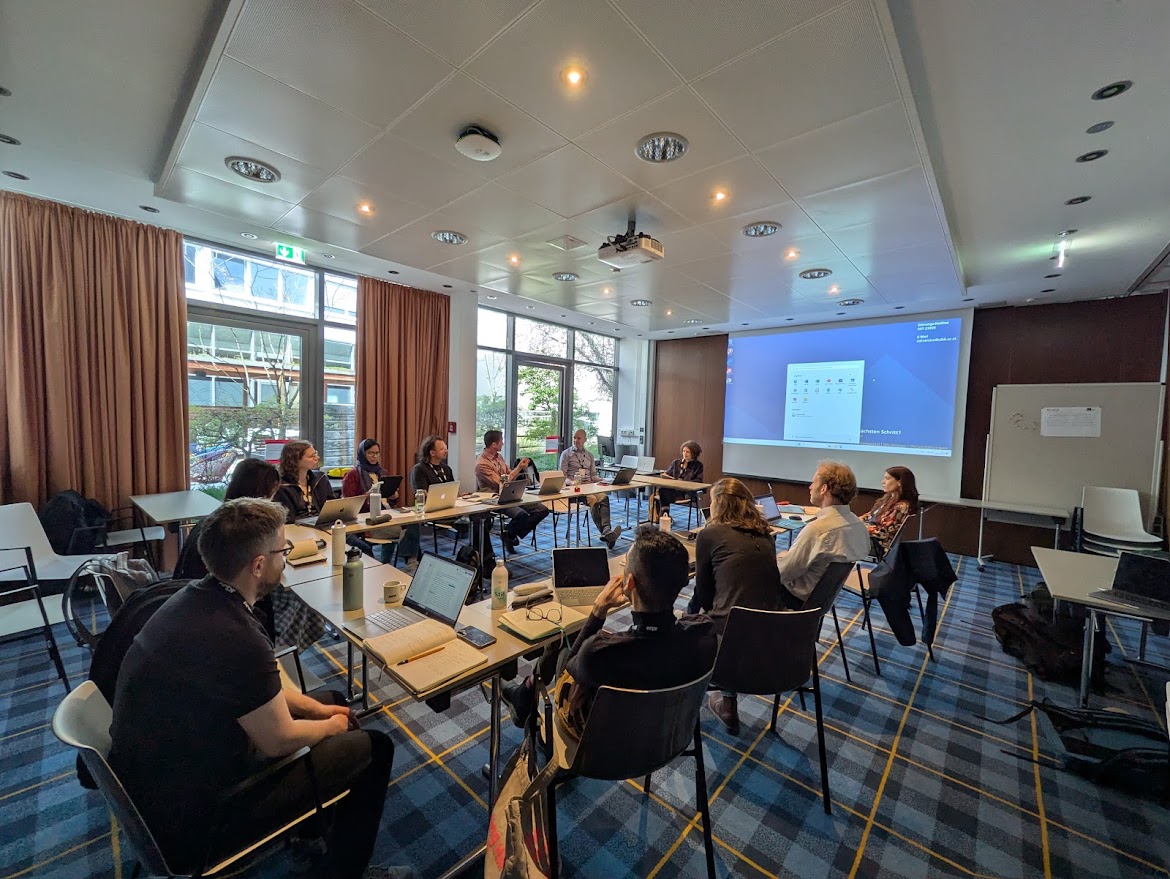
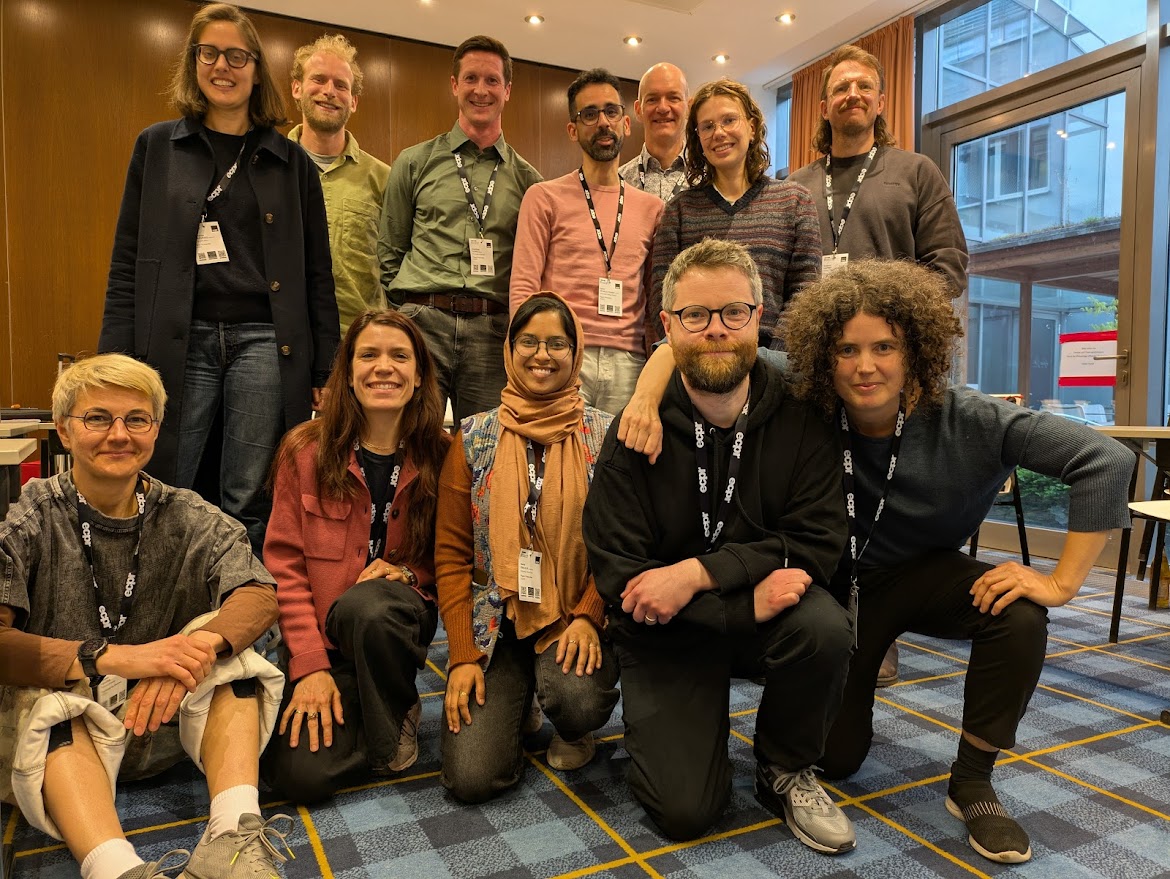
University of Innsbruck, Austria This year, Innsbruck was the setting for three days of intensive scholarly exchange at the ECPR Joint Sessions. This year’s workshop, directed by Sune Lægaard (Roskilde University) and Marina Vahter (Tallinn University), brought together twelve scholars to explore a simple but underworked question: how can normative and empirical approaches genuinely enrich one another? This question was discussed not only in the seminar room but also during an afternoon hike along the mountain paths of Innsbruck's dramatic Nordkette ridge, with the city spread below, making the group feel less like a workshop and more like an intellectual community. Sune Lægaard argued that civility norms cannot be evaluated by standard free speech theory alone, because what counts as acceptable speech is irreducibly context-specific. Francesca Chiarvesio complicated the picture by examining authoritarian co-optation and depoliticization. Ophelia Nicole-Berva tackled the 'black box' between fieldwork and normative theorising. Naima Chahboun diagnosed a dilemma at the heart of standard feasibility theory. Edmund Handby reframed the strategic voting debate by asking not whether it is bad but whether it is that bad relative to the alternatives. Marina Vahter discussed utopian reasoning as a philosophical tool for question-generation. Sania Ismailee diagnosed India's Uniform Civil Code impasse as methodological. Coline Rondiat mapped how legitimacy principles were invoked and reworked under crisis conditions. Jonathan Floyd discussed what separates legitimate philosophical persuasion from mere rhetoric. Lucas de Melo Prado presented an analysis of presidential campaign discourse in the US and Brazil over more than two decades. Hidde Boonstra asked what civil servants should do when elected officials themselves erode democratic checks and balances. Ciarán Ó Briain closed the workshop with a paper on climate displacement and methodological nationalism. Across twelve papers, three mountain-framed days, and more than a few lively lunches and dinners, the workshop demonstrated that while the divide between political theory and political science is real, it is not insurmountable, and bridging it produces better questions and insight than either tradition generates alone. 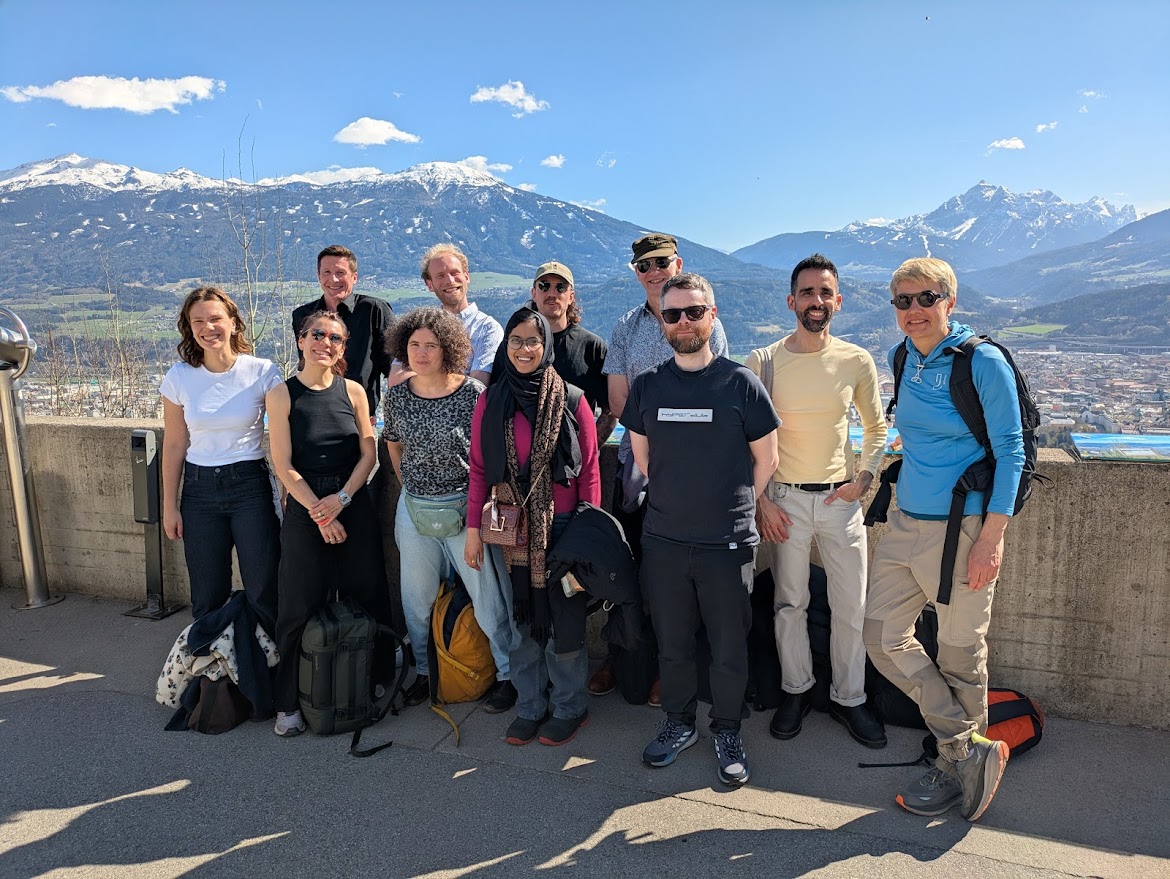
Upcoming Academic Events ECPR General Conference 2026Methodological Reflections on the Status, Norms, and Institutions of Democracy 8-11 September 2026
Jagiellonian University, Kraków The 2026 ECPR General Conference will be held in Jagiellonian University Kraków, Poland from 8 to 11 September 2026. Esma Baycan-Herzog and Ed Handby are co-organising the Section 38 Methods of Normative Political Theory. The section will include 7 different panels, the schedule and the program is near to taking their final shapes at the moment of writing. The role and status of democracy remain of central concern to political science, public policy, and political theory. The tension and juxtaposition between democratic and authoritarian modes of government, the maintenance of democratic norms and institutions, and increasing levels of democratic backsliding have long been considered in the literature. More recently, these concerns have been exacerbated by significant threats to democratic norms and institutions in various parts of the world, including Europe and the United States. This proposed Section of Methods of Normative Political Theory provides a venue for methodologists to contribute to the ongoing project of examining democratic norms and institutions in light of methodological reflections. This section contributes to the methodological dimensions of normative political theory as a venue for rethinking democracy. Methodologists—those concerned with the logic, justification, and scope of political theorising—illuminate how our conceptions of democracy depend on underlying assumptions about what counts as valid reasoning, legitimate disagreement, or the proper relationship between theory and practice. The task of interrogating democracy, democratic norms and institutions, as well as their alternatives, can significantly benefit from a careful methodological investigation. While various disciplines and approaches (e.g. political science or democratic theory) raise concerns pertaining to the decreasing quality of common public debate, methodological approaches are better suited, as they have the specific toolset adequate to diagnose the changing character of plausible public argumentation. In addition, methodologists in normative theory have developed methodological tools and approaches for examining phenomena such as democratic backsliding. Democracy, broadly conceived, is a multifaceted political phenomenon: addressing it with a wide range of methods, approaches, and perspectives from various disciplines in the social sciences allows to better appreciate its complexity. 
General Conference Plenary Political Theory Roundtable"If democracy is dying, isn't it time political theorists thought of something else?" Friday, 11:15-13:00 Faculty of International and Political Studies, Floor: Ground, Room 39 Following some announcements from the four political theory standing groups, a little bit of fun opinion polling of those gathered on the day, and the announcement of the inaugural winner of the Onora O'Neill Book Prize, we will then start a debate in response to the question above. This debate will be chaired by our own Jonathan Floyd, and will feature Esma Baycan Herzog, Jochen Bojanowski, Markus Patberg, and Elise Roumeas as our key interlocuters, plus lots of Q/A involvement with the gathered audience. Having fought hard for this plenary event to take place on behalf of our subject, it would be great to see as many as possible of you there! Political Theory Methodology Workshop on behalf of IPSA and the Waseda Institute of Political Economy 29/30 October 2026 Waseda University, Tokyo, Japan Featuring keynote lectures from Humeira Iqtida (KCL) and our own Jonathan Floyd (Bristol), this 2 day workshop will play host to a large number of early-career scholars keen to refine and develop their methodological thinking. Some funding is available for local accommodation expenses. Call for papers coming soon, and for any questions contact our much-valued member Kei Hiruta (Kei.Hiruta@Waseda.JP). 
News1. ICLRS Young Scholars Fellowship on Religion and the Rule of Law Christ Church College, University of Oxford Funded by BYU Law School Sania Ismailee is one of the recipients of the International Centre for Law and Religion Studies (ICLRS) Young Scholars Fellowship on Religion and the Rule of Law funded by BYU Law School. As part of the Program, she will be spending three weeks at Christ Church College, University of Oxford. The program aims to help early career academics publish a journal article and train them to teach a course on Law and Religion. Sania will be developing her paper on the Karnataka hijab controversy titled “The Wrongs of the Karnataka Hijab Controversy: Beyond Religious Freedom”. Recently, she published an Opinion Piece “In Karnataka and Beyond, the hijab and the saffron shawl cannot be equated” for the Indian Express. 2. Keynote on 'What is the Point of Methodology in Political Theory?' In May this year, our Standing Group Chair, Jonathan Floyd, gave a keynote lecture on this theme at the annual Brave New World graduate political theory conference held at the University of Manchester. Many thanks to Yonghao Huang and Anthony McMullin for hosting! Recent Publications1. Empirical Political Theory: A Methodological Framework By Nahshon Perez
Oxford University Press
Empirical Political Theory: A Methodological Framework establishes a systematic methodological foundation for empirically informed normative political theory. While political science has developed a rich methodological literature, political theory has often left its methods implicit. Yet political theory research involves methodological choices through case selection, argument-structure, or empirical claims, and making these explicit improves transparency, rigor, and consistency. The book pursues two central objectives. First, it offers a typology of how empirical data function in political theory, including spotlighting, definition, conversion, institutional clarity, theoretical clarity, and theory improvement. This typology provides a structured way for scholars to recognize and refine their own uses of data. Second, it proposes a research template organized around three stages (description and patterning, evaluation, and prescription) linked by a feedback loop. This framework mirrors the methodological clarity available in political science while remaining compatible with diverse normative approaches. Contents Introduction: Why Explicit Methodological Awareness Is Crucial to Normative Political Theory
1: The Methodological Turn of Political Theory and the Rise of Empirically Informed Political Theory
2: Demarcating Normative Political Theory from Political Science: And Why It Matters Methodologically
3: The Various Uses of Empirical Statements/"Data" within Political Theory: A Typology
4: Empirical Political Theory: A Research Template
5: The Case for Methodological Naturalization: Between Political Theory and Political Science
6: Refuting Political Theories?: An Empiricist View
7: Is Empirical Political Theory Bent toward the Status Quo?
8: A Brief Look into the Future: Artificial Intelligence: The Changing Landscape of Empirical Political Theory
Conclusion: The Contributions and Future Directions of Empirical Political Theory 2. Time of Democracy History, Memory, and the Politics of the Future By Timo Miettinen
Routledge 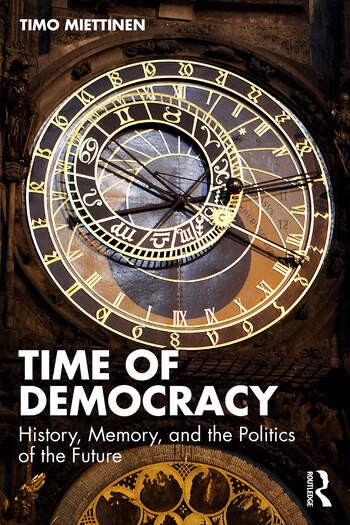
In Time of Democracy, Timo Miettinen takes readers on a fascinating journey through the history of democratic ideas, showing how our political systems are deeply shaped by the way we understand the past, imagine the future, and live in the present. From Renaissance thinkers such as Machiavelli to modern ideas of crisis and revolution, this book traces how democracy emerged from a new understanding of change, human agency, and historical progress. Miettinen defends the openness of the future against both totalitarian visions and nostalgic retreats, showing how democracy withers when history is used to shut down alternatives. Accessible, sharp, and packed with thought-provoking examples, Time of Democracy is perfect for students looking to connect big ideas from political theory, history, and philosophy to real-world issues, or simply curious about how time and history shape the way we live together. Whether you're studying democracy, European politics, or just curious about how time shapes the way we live together, this book offers fresh tools to think critically and creatively about the future of democratic life. Contents: Introduction 1. Breaking the Circle: Contingency, Fortune, and the Temporal Foundations of Democratic Thought 2. From Timeless Ideals to Temporal Orders: Raison d'État and the Birth of Political Time 3. History Accelerated: Democracy and the Revolutionary Imagination 4. The Invention of Democratic Time: Romanticism, Liberalism, and Historical Consciousness 5. After Providence: Democracy's Temporal Dilemmas in the Twentieth Century 6. Democracy's Lost Time: History without a Future. Conclusion: To Move Forward without Forgetting
Editorial TeamEdmund Handby is a Postdoctoral Associate in the Department of Political Science at Duke University. His research examines methodological questions in the history of political thought, empirically informed political theory, and politics, philosophy, and economics. His work has appeared in The Journal of Politics, the European Journal of Political Theory, and The Journal of the Philosophy of History. Sania Ismailee is an Assistant Professor at the School of Law, BML Munjal University. Her research interests lie at the intersection of political philosophy, law, and religion. Sania’s research interests also include critically examining the methodology of Indian political theory debates. Her dissertation examined normative justifications around diverse religious family laws in India (the Uniform Civil Code Debate) from perspectives on secularism, gender justice, and religious freedom. She was a Fulbright Nehru Doctoral Researcher at Columbia University and a Commonwealth Split-Site Fellow at the University of Oxford. Sania has published on the Karnataka hijab controversy, comparing V D Savarkar’s and B R Ambedkar’s comments on Muslims, affective approaches to justice, along with several book reviews on religion and political theory. Lucas de Melo Prado is a PhD candidate at University College Dublin, specialising in applied political theory and distributive justice. His current research examines the last seven presidential elections in the USA and Brazil to evaluate candidates’ rhetoric of inequality from a liberal perspective. Before his PhD studies, Lucas worked for nine years as a lecturer of Moral and Legal Philosophy at three Brazilian law schools (Uniavan, Sinergia, and Univali). He also published in various Brazilian peer-reviewed journals, such as the Brazilian Journal of International Law and the Brazilian Journal Law and Politics (“Revista Eletrônica Direito e Política”).
February 25, 2026 Methods of Normative Political Theory Newsletter March 2026 #14The quarterly newsletter of the ECPR Standing Group on Methods of Normative Political Theory.
On behalf of the Standing Group on Methods of Normative Political Theory, we are happy to announce that the quarterly newsletter of the Methods of Normative Political Theory will appear at the beginning of March, June, September, and December. The newsletters will remain ... more
From the Standing Group on Methods of Normative Political TheoryUpcoming Academic EventsECPR Joint Sessions Workshop 2026Between Norms and Evidence:
Connecting Normative Political Theory and Political Science 7–10 April 2026
University of Innsbruck, Austria Registration is now open until 4 March 2026. Register here. 
The workshop Between Norms and Evidence: Connecting Normative Political Theory and Political Science, organised by Sune Lægaard and Marina Vahter, is endorsed by the Methods of Normative Political Theory and the Analytical Politics and Public Choice standing groups. This workshop seeks to connect empirical political research and normative political theory. The goal is to develop methodologies that better justify empirical research’s conceptual premises and pin down how normative political theory should use empirical evidence. The results of this dialogue would enhance both fields as well as provide rich material for future collaborations. The Joint Sessions format allows for in-depth engagement with every paper over the four days. Each paper will have a dedicated discussant, assigned by the workshop directors, Sune and Marina. Thus, every paper will receive detailed feedback. You can find more information about the 2026 ECPR Joint Sessions here. You can also have a look at the workshop outline here. ECPR General Conference 2026Methodological Reflections on the Status, Norms, and Institutions of Democracy 8–11 September 2026
Jagiellonian University, Kraków Registration opens on 18 March 2026. 
The 2026 ECPR General Conference will be held in Jagiellonian University Kraków, Poland from 8 to 11 September 2026. Esma Baycan-Herzog and Ed Handby are co-organising the section Methodological Reflections on the Status, Norms, and Institutions of Democracy. The section provides a venue for methodologists to contribute to the ongoing project of examining democratic norms and institutions in light of methodological reflections. Papers in this section approach questions of method in the context of challenges to democracy: how to understand or model democracy in ways that strengthen norms and institutions or propose viable alternatives. This includes papers on how to understand democracy in theory and practice, such as the role of democratic institutions, forms of justification in democracy, and the nature of democratic consent. Furthermore, the section examines various core features of democracy, such as the nature of the democratic citizen, and how their investigation changes depending on the methodology and the kind of normativity employed. In this way, the focus of the section is not only democracy more broadly, but its constituent parts. Finally, the section examines the place of democracy and democratic ideals. It invites comparisons between democratic and non-democratic forms of government, the online dimensions of democracy, and the very nexus between democracy and the study of methods itself. Other Upcoming Academic Events
Global Theory Forum Spring Symposium27 April 2026, University College London Abstract submission is now open until 9 March 2026. Submit here. The Global Theory Forum (GTF) is now inviting submissions from Early Career political theorists and philosophers for our 2026 Spring Symposium (27th April, Room 421, Roberts Building, University College London). We are thrilled to be funded by the Society for Applied Philosophy, which aims to promote philosophical work with direct practical and public impact. The event will include four panels, each involving two early-career speakers and one senior discussant, and arranged around four topical themes: - The methodology of situated theory
(chaired by Dr Alice Baderin, University of Reading) - Digital technology, AI, and global power
(chaired by Dr Alex Grzankowski, KCL) - The climate crisis
(chaired by Dr Ross Mittiga, SOAS) - Work and its future
(chaired by Dr Tom Parr, University of Warwick)
More details on these themes can be found here. In each panel, speakers will present for 15-20 minutes, followed by a response from our senior discussant and a Q&A. The Symposium keynote will be delivered by Professor Jeff Howard (UCL), whose research on online communications pairs political philosophy with deep engagement with policy and legal scholarship. There will also be a drinks reception hosted at UCL, and dinner for the selected panellists and discussants. We invite PhD students and ECRs (within 5 years post-PhD) to submit their 150-word abstract by 9th March 2026 via this form. We particularly encourage those in the midst of developing ideas to apply, as GTF aims to be a space for theoretical experimentation, academic exchange, and collaborative growth. We are open to work using a variety of methodologies and disciplinary backgrounds, as long as there is a substantial political theory or philosophical focus. We particularly welcome work drawing on international political thinkers or problems. Travel and accommodation costs will also be supported for those based outside of London (up to a maximum of £135). Please direct any questions to globaltheoryforum@gmail.com.
NewsResearch ProjectIDHEA – Institutional Dirty-Hands Heuristic ApproachUniversity of Geneva
Funded by the Swiss National Science Foundation Principal Investigator: Professor Emanuela Ceva Public institutional action in non-ideal circumstances may require public officeholders to deviate from compliance with institutional rules to get round institutional dysfunctions. This may occur when public officeholders struggle to ensure service delivery due to excessive bureaucracy, corruption, or emergencies such as health or security crises. Public officeholders might develop the conviction that the only way forward is to (ab)use the discretion that comes with their office to perform their functions. However, this apparent necessity can impose significant affective and moral burdens on officeholders and reveal a breakdown of their relations of mutual trust. How should public officeholders handle those situations when the demands of institutional compliance conflict with those of addressing institutional dysfunctions? The IDHEA project—Institutional Dirty-Hands Heuristic Approach (funded by the Swiss National Science Foundation)—proposes to address this question by adopting a heuristic approach based on “dirty hands.” Find out more about the IDHEA project here. Job OpportunityDoctoral researchers in the DFG Graduate Program “Collective Decision-Making” (12 positions) Universität Hamburg
Faculty of Business, Economics and Social Sciences
Faculty of Humanities Application deadline: 31 March 2026
Start date: 1 November 2026, fixed for a period of three years The English language graduate program is funded by the German Research Foundation (DFG) and is concerned with the descriptive and normative dimensions of collective decision-making. It provides doctoral researchers in Economics, Philosophy, and Political Science (including Political Theory) with a structured qualification program to do their doctorate in one of the three disciplines. The research program conceptualises collective decision-making as a complex and interactive process involving individual preferences, epistemic and normative beliefs, as well as decision-making procedures and institutions. It integrates theoretical and empirical research, including experimental methods. Researchers completing the program will stand out for their ability to engage in advanced theoretical, empirical, and normative reasoning about collective decision-making and generate new ideas concerning the design of procedures to tackle the complex governance problems of modern society. Find more information and apply for this position here.
Recent Paper PublicationsCeva, Emanuela, and Patrizia Pedrini. 2026. ‘What Political Theory Can Learn from Conceptual Engineering: The Case of “Corruption”.’ American Journal of Political Science 1–14. doi: 10.1111/ajps.70035. Perez, Nahshon, Ariel Zellman, and Jonathan Fox. 2026. ‘Re-Assessing Gov-ernmental Corruption of Religion: Where Political Theory Meets Empirical Evidence.’ Ethnicities (Online First): 1–23. doi: 10.1177/14687968261424659.
Res Publica 32(1) is forthcoming in the beginning of 2026 and will include a special issue on “Ideal Principles, Real Behaviour, and Possible Experiments,” edited by Jonathan Floyd and Sune Lægaard. You can access the introduction to this special edition online: Floyd, Jonathan, and Sune Lægaard. 2026. ‘From Empirical to Experimental Political Theory.’ Res Publica. doi: 10.1007/s11158-026-09763-0.
Recent Book PublicationsDerrida, Deconstruction and Political TheoryBy Lasse Thomassen
Edinburgh University Press (30% discount with code NEW30)  Drawing on the work of Jacques Derrida and other post-structuralists, Derrida, Deconstruction and Political Theory explores deconstruction as a distinctive way to practice political theory. Lasse Thomassen shows familiar critiques of deconstruction as relativist and apolitical to be misconceived and argues for deconstruction as a critical approach to contemporary politics and society. The book contrasts deconstruction with other approaches to political theory, including analytic philosophy, critical theory, liberalism, deliberative democracy and biopolitical approaches. Developing the argument around political concepts such as rights, justice, sovereignty, democracy and populism, the chapters examine how one may combine the deconstructive readings of these political concepts with engagements with contemporary political phenomena such as 9-11, Covid-19, Donald Trump and post-truth. Contents Introduction: Deconstruction as Political Theory - Deconstruction Between Particularity and Universality: Practicing Political Theory Deconstructively
- Deconstructing Sovereignty Discourse: Between the Conditional and the Unconditional
- Democracy To-Come: Dealing with Disagreement
- Democratic Rogues: The People Goes to The Capitol
- The Force of Truth: Deconstruction against Post-Truth
- Deconstruction as/of Method: Exemplarity and Casing
Conclusion: Deconstruction and Political Theory
Why Political Theory Needs Social Science Edited by Alice Baderin and David Miller Edited by Alice Baderin and David Miller
Oxford University Press (30% discount with code AUFLY30)
If we are interested in questions about how we ought to organize our political lives, what kind of role should we give to social scientific data that reveals how the political world actually works? We’ve recruited some top-flight scholars working at the intersection of political theory and social science to investigate the role of empirical evidence in normative theory. The book builds on recent efforts to move the methodological debate about ‘facts and principles’ to a more concrete level. Rather than engaging with the question of ‘fact sensitivity’ in abstract terms, the chapters illustrate the payoffs, and probe the limits, of empirically informed approaches in a range of contexts. In Part One, our contributors consider different social scientific research methods (e.g. qualitative interviewing, ethnography, survey research) and ask in each case how and why the evidence they generate can be of value for political theorists. The underlying thought here is that different types of data might serve different purposes within political theory; or they might support distinct styles of theory. Part Two shows how normative work on specific topics either has been or should be informed by empirical evidence. We believe we can best understand how social science can inform political theory by seeing it in action: how might closer engagement with factual evidence change the way we think, normatively, about free speech, or civil disobedience, or immigration, for example? Taken together, the chapters amount to a manifesto for empirically informed political theory. Whilst acknowledging limits to what facts can tell us about normative principles, and the challenges bound up with interdisciplinary inquiry, we hope that the volume demonstrates the value of integrating social science and political theory. Our target readership is political theory graduate students looking for methodological guidance, as well as established scholars working on methodological issues or on the substantive topics covered in Part Two. Contents and contributors Introduction, Alice Baderin and David Miller Part One - Inductive Political Theory, Hélène Landemore
- Texts Do Not Talk Back: Ethnography and Political Theory, Humeira Iqtidar
- Dynamic Public Reflective Equilibrium, Jonathan Wolff and Avner de Shalit
- Experiments as a Resource for Political Philosophy, David Miller
- Two Models of Opinion-Sensitive Political Philosophy, Alice Baderin
- Normative Behaviourism: From Observation to Justification, Jonathan Floyd
Part Two - Realising and Revising Deliberative Democracy, Alfred Moore
- Is Liberal Nationalism Empirically Plausible?, Gina Gustavsson
- Using Interviews in the Political Philosophy of Resistance, Guy Aitchison
- Free Speech Facts, Sarah Fisher and Jeffrey Howard
- The Empirical Premises of Economic Limitarianism, Huub Brouwer and Ingrid Robeyns
- Do Arguments about Immigration Ethics Change Minds?, Mollie Gerver, Dominik Duell, Miranda Simon, and Patrick Low
Upcoming Book PublicationEmpirical Political Theory: A Methodological FrameworkBy Nahshon Perez (Forthcoming in May 2026)
Empirical Political Theory: A Methodological Framework establishes a systematic methodological foundation for empirically informed normative political theory. While political science has developed a rich methodological literature, political theory has often left its methods implicit. Yet political theory re-search involves methodological choices through case selection, argument-structure, or empirical claims, and making these explicit improves transparency, rigor, and consistency. The book pursues two central objectives. First, it offers a typology of how empirical data function in political theory, including spotlighting, definition, conversion, institutional clarity, theoretical clarity, and theory improvement. This typology provides a structured way for scholars to recognize and refine their own uses of data. Second, it proposes a research template organized around three stages (description and patterning, evaluation, and prescription) linked by a feedback loop. This framework mirrors the methodological clarity available in political science while remaining compatible with diverse normative approaches. Additional chapters examine how political science methods can be naturalized within political theory, explore the possibilities and limits of falsifica-tion, address concerns about status quo bias, and consider the potential role of artificial intelligence in future methodological development. The book provides political theorists with a practical, pluralistic toolkit for integrating empirical insights into normative inquiry. Contents Introduction: Why Explicit Methodological Awareness Is Crucial to Normative Political Theory 1. The Methodological Turn of Political Theory and the Rise of Empirically Informed Political Theory 2. Demarcating Normative Political Theory from Political Science: And Why It Matters Methodologically 3. The Various Uses of Empirical Statements/"Data" within Political Theory: A Typology 4. Empirical Political Theory: A Research Template 5. The Case for Methodological Naturalization: Between Political Theory and Political Science 6. Refuting Political Theories?: An Empiricist View 7. Is Empirical Political Theory Bent toward the Status Quo? 8. A Brief Look into the Future: Artificial Intelligence: The Changing Landscape of Empirical Political Theory Conclusion: The Contributions and Future Directions of Empirical Political Theory
Editorial TeamEdmund Handby is a Postdoctoral Associate in the Department of Political Science at Duke University. His research examines methodological questions in the history of political thought, empirically informed political theory, and politics, philosophy, and economics. His work has appeared in The Journal of Politics, the European Journal of Political Theory, and The Journal of the Philosophy of History. Glorianne Wilkins is a Ph. D. student at the department of Political Theory at the University of Potsdam. Her thesis is on ‘Uncertainty and Decision Making in a Political World.’ Her research engages with the theoretical disciplines of political philosophy, political epistemology, and liberal democratic theory. She is particularly interested in the nature of unquestioned assumptions as it relates to particular concepts taken as fundamental to contemporary politics: truth, (liberal) democracy, among others. In recent times these values have wavered in their ability to unite decision makers, instead becoming conceptual weapons wielded by all sides. Through her research she considers how engaging with these concepts and their assumptions can inform how we make decisions under greater conditions of uncertainty. Sania Ismailee is an Assistant Professor at the School of Law, BML Munjal University. Her research interests lie at the intersection of political philosophy, law, and religion. Sania’s research interests also include critically examining the methodology of Indian political theory debates. Her dissertation examined normative justifications around diverse religious family laws in India (the Uniform Civil Code Debate) from perspectives on secularism, gender justice, and religious freedom. She was a Fulbright Nehru Doctoral Researcher at Columbia University and a Commonwealth Split-Site Fellow at the University of Oxford. Sania has published on the Karnataka hijab controversy, comparing V D Savarkar’s and B R Ambedkar’s comments on Muslims, affective approaches to justice, along with several book reviews on religion and political theory. Lucas de Melo Prado is a PhD candidate at University College Dublin, specialising in applied political theory and distributive justice. His current research examines the last seven presidential elections in the USA and Brazil to evaluate candidates’ rhetoric of inequality from a liberal perspective. Before his PhD studies, Lucas worked for nine years as a lecturer of Moral and Legal Philosophy at three Brazilian law schools (Uniavan, Sinergia, and Univali). He also published in various Brazilian peer-reviewed journals, such as the Brazilian Journal of International Law and the Brazilian Journal Law and Politics (“Revista Eletrônica Direito e Política”).
December 12, 2025 Methods of Normative Political Theory Newsletter December 2025 #13This newsletter from the Standing Group on Methods of Normative Political Theory presents key upcoming events, calls for participation, recent publications, and news from the field, including recent and forthcoming contributions to a special issue of Res Publica and a themed issue of Public Humanities on Public Political Philosophy. It also provides details of the ... more
From the Standing Group on Methods of Normative Political TheoryUpcoming Academic Events
ECPR Joint Sessions Workshop 2026
Between Norms and Evidence: Connecting Normative Political Theory and Political Science
7-10 April 2026
University of Innsbruck, Austria
We are pleased to announce that our Standing Group’s workshop proposal for the Joint Sessions has been accepted. We are now accepting abstract submissions for the workshop Between Norms and Evidence: Connecting Normative Political Theory and Political Science. Organised by Sune Lægaard and Marina Vahter, this workshop is endorsed by the Methods of Normative Political Theory and the Analytical Politics and Public Choice standing groups.
The Joint Sessions format allows for in-depth engagement with every paper over the four days. Each paper will have a dedicated discussant, assigned by the workshop directors, Sune and Marina. Thus, every paper will receive detailed feedback. Have a look at the workshop outline here. ECPR General Conference 2026
Methodological Reflections on the Status, Norms, and Institutions of Democracy
8-11 September 2026
Jagiellonian University, Kraków
The 2026 ECPR General Conference will be held in Jagiellonian University Kraków, Poland from 8 to 11 September 2026. Esma Baycan-Herzog and Ed Handby will be co-organising the Section for ECPR 2026. The deadline for paper and panel proposals is 5 January. Apply here
The Section provides a venue for methodologists to contribute to the ongoing project of examining democratic norms and institutions in light of methodological reflections. The theme of the Section proposal for 2026 continues the work started with the 2025 Section, by applying recent innovations in methodology to the role and status of democracy. We encourage proposals that approach questions of method in the context of challenges to democracy: how to understand or model democracy in a way that strengthens norms and institutions, or propose viable alternatives. This includes papers on how to understand democracy in theory and practice, such as the role of democratic institutions, forms of justification in democracy, and the nature of democratic consent. Furthermore, the Section examines various core features of democracy, such as the nature of the democratic citizen, and how their investigation changes depending on the methodology and the kind of normativity employed. In this way, the focus of the Section is not only democracy more broadly, but its constituent parts. Finally, the Section examines the place of democracy and democratic ideals. It invites comparisons between democratic and non-democratic forms of government, the online dimensions of democracy, and the very nexus between democracy and the study of methods itself. Onora O’Neill Book Prize in Political Theory
We are delighted to announce that nominations for the Onora O’Neill Political Theory Prize are now open. Sponsored by the Critical Review of International Social and Political Philosophy (CRISPP), this prize honours the best book in political theory published in the last three years (from January 2022 onwards). The prize cuts across all traditions, orientations and approaches in political theory, political thought, and political philosophy, and does not take into account whether the nominated works are first book publications or not. The winner will receive £250, and their book will be the subject of a panel at the 2026 ECPR General Conference, with potential publication as a symposium in CRISPP. Nominations, including a book abstract and PDF, should be submitted to ecproopt@gmail.com with the jury chair in CC (a.poama@fgga.leidenuniv.nl) by 31 January 2026. Click here for details. News
Recent Publications
Res Publica, Vol. 32, issue 1, which is forthcoming in the beginning of 2026, will include a special issue on “Ideal Principles, Real Behaviour, and Possible Experiments”, edited by Jonathan Floyd and Sune Lægaard. The papers going into the special issue are already published online as follows:
- Midtgaard, Søren Flinch. “X-Phi and Theory Acceptance in Political Philosophy.” Res Publica, Vol. 32 Issue: 1 (2026).
- Lippert-Rasmussen, Kasper. “Can Experimental Political Philosophers be Modest in their Aims?” Res Publica, Vol. 32 Issue: 1 (2026).
- Erman, Eva and Niklas Möller. “Why Normative Behaviourism Does Not Improve Political Realism.” Res Publica, Vol. 32 Issue: 1 (2026).
- Cozzaglio, Ilaria. “Revised Normative Behaviourism: An Experimental Proposal.” Res Publica, Vol. 32 Issue: 1 (2026).
- Kim, Hwa Young. “What Should We Say to Denmark? Mentalism as an Essential Complement to Behavourism.” Res Publica, Vol. 32 Issue: 1 (2026).
- Favara, Greta. “Normative Behaviourism and Action-Guidance: The Challenge of the Climate Crisis.” Res Publica, Vol. 32 Issue: 1 (2026).
- Maynard, Jonathan Leader. “Comparative Historical Analysis in Political Theory.” Res Publica, Vol. 32 Issue: 1 (2026).
- Floyd, Jonathan. “Experimental Political Theory: Behavioural, Careful, Radical.” Res Publica, Vol. 32 Issue: 1 (2026).
Announcing ‘Public Political Philosophy’, themed issue at Public Humanities guest edited by George Boss (Queen Mary University of London), co-edited by Jonathan Floyd (University of Bristol)
This themed issue investigates the persistent gap between political philosophy and everyday politics. That gap has come under growing scrutiny. In part, this has been driven by external pressures from universities, funders, and policymakers to deliver measurable impact and show public engagement. More fundamentally, though, the methodological turn within the field itself has led to growing calls for forms of philosophising that are more closely attuned to the empirical realities of everyday life, and whose significance reaches beyond the academy. Responding to these shifts, the issue gathers political philosophers with diverse approaches to examine the nature, aims, and practices of public political philosophy. Together, the contributions map the conceptual contours of this emerging agenda, assess its prospects and challenges, and sketch the possible trajectories of its future development.
The following contributions have already been made available by Public Humanities, with the full issue due for release in early 2026:
- Baderin, Alice. “Making Political Philosophy Public: The Role of Empirical Inquiry.” Public Humanities (2025).
- Halldenius, Lena and Moa Petersén. “When Philosophy Meets the Street: Lived Experience and Epistemic Recognition in Field-Based Philosophy.” Public Humanities (2025).
- Doughty, Jamie. “Reclaiming Public Space: Statues as Resources for a Queer Political Philosophy.” Public Humanities (2025).
- Stitzlein, Sarah M. “Philosophy of Education as Public Political Philosophy: Practice, Possibilities, and Provocations.” Public Humanities (2025).
- Stevens, Simon. “Public Political Philosophy, Moral Sentimentalism, and Larp.” Public Humanities (2025).
- Hamilton, Lawrence. “The Attitude and Audience of the Public Political Theorist: Thinking Critically and Politically with Fellow Citizens.” Public Humanities (2025).
Editorial Team
Edmund Handby is a Postdoctoral Associate in the Department of Political Science at Duke University. His research examines methodological questions in the history of political thought, empirically informed political theory, and politics, philosophy, and economics. His work has appeared in The Journal of Politics, the European Journal of Political Theory, and The Journal of the Philosophy of History.
Glorianne Wilkins is a Ph. D. student at the department of Political Theory at the University of Potsdam. Her thesis is on 'Uncertainty and Decision Making in a Political World'. Her research engages with the theoretical disciplines of political philosophy, political epistemology, and liberal democratic theory. She is particularly interested in the nature of unquestioned assumptions as it relates to particular concepts taken as fundamental to contemporary politics: truth, (liberal) democracy, among others. In recent times these values have wavered in their ability to unite decision makers, instead becoming conceptual weapons wielded by all sides. Through her research she considers how engaging with these concepts and their assumptions can inform how we make decisions under greater conditions of uncertainty.
Sania Ismailee is an Assistant Professor at the School of Law, BML Munjal University. Her research interests lie at the intersection of political philosophy, law, and religion. Sania’s research interests also include critically examining the methodology of Indian political theory debates. Her dissertation examined normative justifications around diverse religious family laws in India (the Uniform Civil Code Debate) from perspectives on secularism, gender justice, and religious freedom. She was a Fulbright Nehru Doctoral Researcher at Columbia University and a Commonwealth Split-Site Fellow at the University of Oxford. Sania has published on the Karnataka hijab controversy, comparing V D Savarkar’s and B R Ambedkar’s comments on Muslims, affective approaches to justice, along with several book reviews on religion and political theory.
Lucas de Melo Prado is a PhD candidate at University College Dublin, specialising in applied political theory and distributive justice. His current research examines the last seven presidential elections in the USA and Brazil to evaluate candidates’ rhetoric of inequality from a liberal perspective. Before his PhD studies, Lucas worked for nine years as a lecturer of Moral and Legal Philosophy at three Brazilian law schools (Uniavan, Sinergia, and Univali). He also published in various Brazilian peer-reviewed journals, such as the Brazilian Journal of International Law and the Brazilian Journal Law and Politics (“Revista Eletrônica Direito e Política”).
The quarterly newsletter of the ECPR Standing Group on Methods of Normative Political Theory On behalf of the Standing Group on Methods of Normative Political Theory, we are happy to announce that the quarterly newsletter of the Methods of Normative Political Theory will appear at the beginning of March, June, September, and December. The newsletters will remain accessible on the standing group’s website. We are happy to receive your updates regarding new publications, calls for proposals, events, Summer / Winter PhD Courses and job advertisements pertaining to methods of political theory by email to ecprmethods@gmail.com.
|
 | Loading… |
|

